AAPS BOARD MEMBER, VP OF ENCHANTED DESIGNS
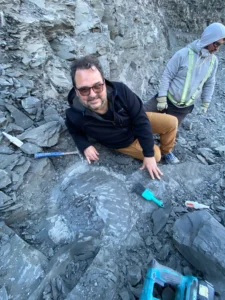
John Issa is a Canadian ammonite specialist whose career has been closely tied to the fossil-rich Bearpaw Formation of southern Alberta—one of the only regions in the world where iridescent ammolite occurs. He began his professional work in 1999 with Canada Fossils Ltd., where he developed field and preparation expertise across a wide range of material while focusing increasingly on the brilliantly preserved ammonites of the Late Cretaceous. Over time, Issa became well known within the commercial paleontology community for both his technical skill and his long-standing presence in major fossil shows and institutional networks.
Issa later worked extensively with Korite, a leading producer of ammolite, before continuing his work with Enchanted Designs Ltd., where he is involved in mining operations, specimen preparation, and the international distribution of Canadian ammonites. His career reflects a sustained intersection between commercial practice and institutional science: operating within Alberta’s regulated fossil framework, his work aligns with provincial and federal oversight, with a clear distinction between material suitable for the collector market and specimens of scientific importance. In this context, Issa’s professional approach emphasizes ethical stewardship alongside commercial activity. Through long-standing involvement with the Association of Applied Paleontological Sciences (including service as president), he has supported standards that encourage responsible collecting, documentation, and collaboration with the research community. His career offers a contemporary model of commercial paleontology—one in which fossil recovery, regulatory compliance, and scientific contribution are not competing aims, but complementary parts of a single, disciplined practice.
AMMOLITE AND THE BEARPAW FORMATION
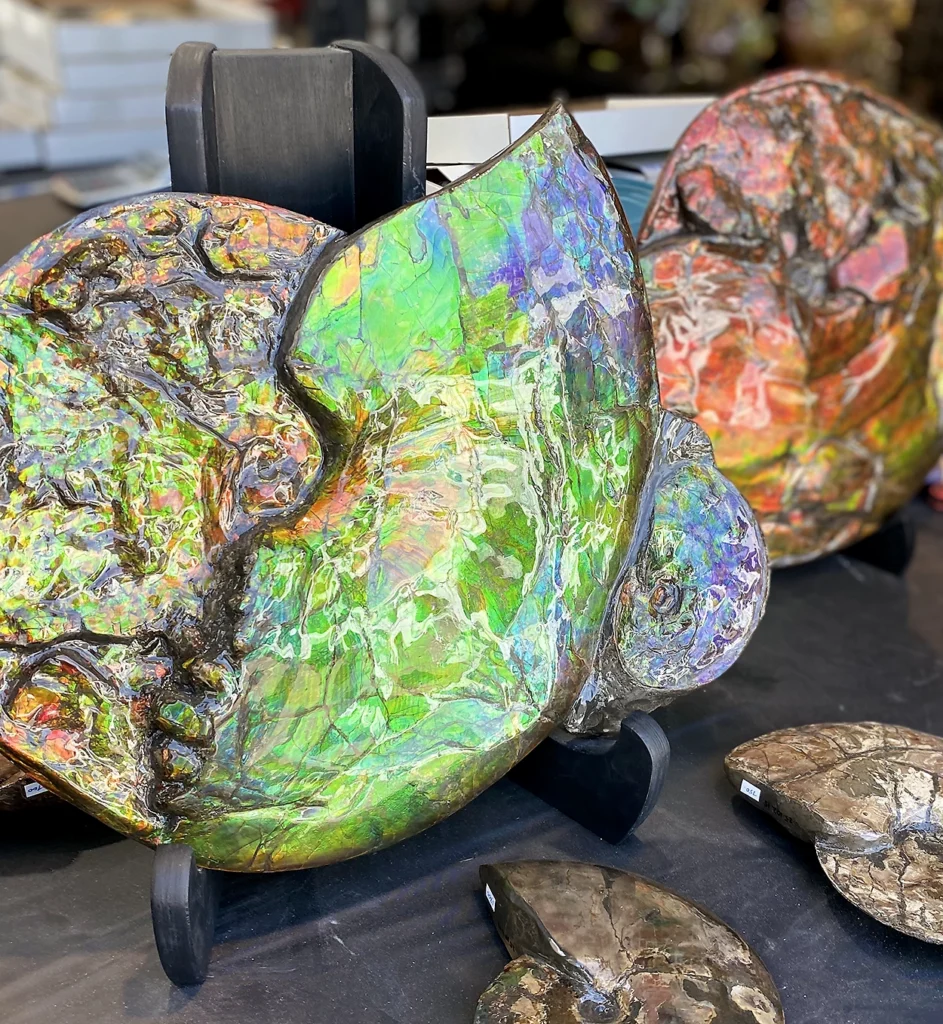
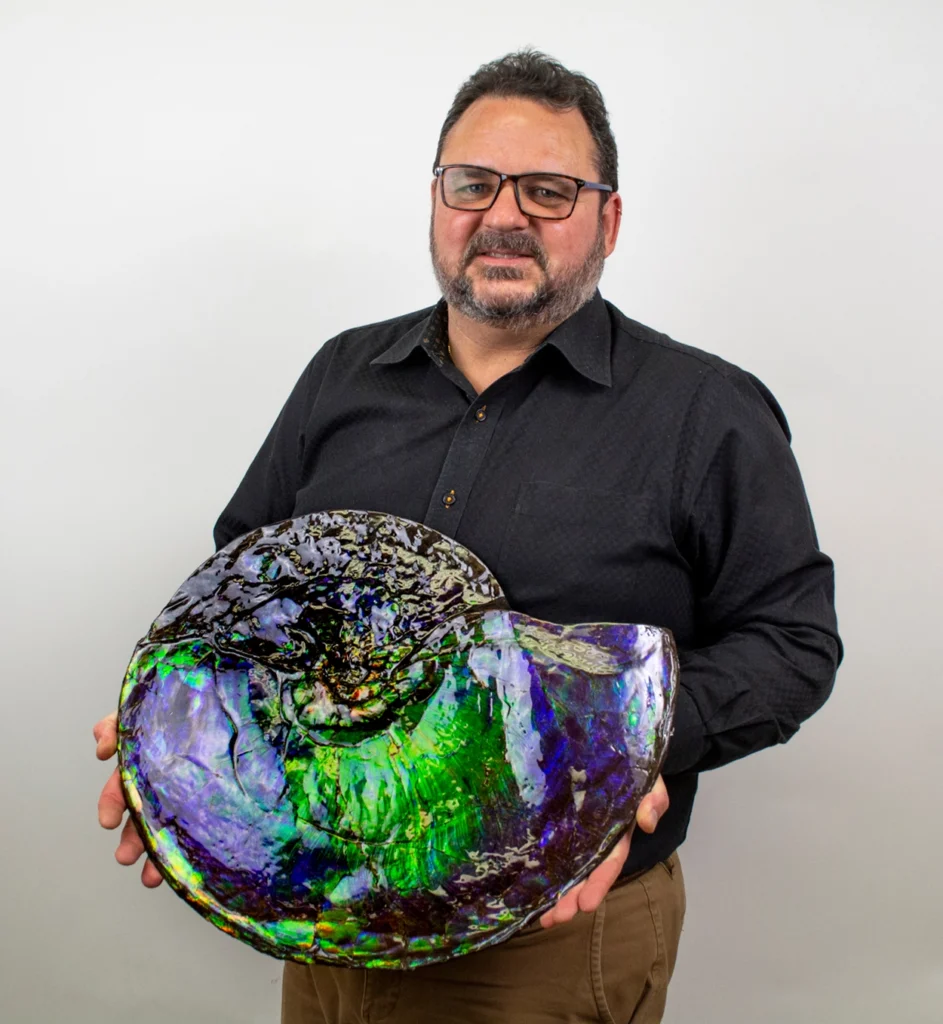
Ammolite is a rare, iridescent gemstone derived from the fossilized shells of Late Cretaceous ammonites, most commonly Placenticeras, found in southern Alberta, Canada. Its shifting colors—caused by the preservation of microscopic aragonite layers—place it among the few biogenic gemstones recognized in the modern trade. These ammonites occur within the Bearpaw Formation, a marine deposit laid down approximately 70–75 million years ago in the Western Interior Seaway. Under exceptional conditions of burial, compression, and mineral stabilization, portions of the original shell retained their nacreous structure, producing the vivid spectral effects seen in gem-grade material. Today, the Bearpaw Formation represents the principal—and effectively exclusive—source of commercial ammolite. Its deposits are tightly regulated, and the recovery of specimens operates within a framework that distinguishes between material suitable for gemstone production and fossils of scientific importance.